
FREE GUIDE
How to Honor Your Medical Clerkships: The Complete Free Guide
Freaking out about the jump from classroom to clinicals? Consider this your trusty sidekick, packed with top-notch rotation advice and real-life tips from med students who've been in your shoes and made it out on the other side. Enter your email and we’ll send the guide directly to your inbox!
What do medical students need to know before starting clerkships?
General Principles & High-Yield Tips
Get the lowdown on everything past clinical students WISH they knew: how to ace the SHELF, snag the best rec letters, impress the right people, stock the white coat like a pro, and more!
What to Expect on Clerkships
Get an example of a typical inpatient & outpatient schedules, terms, conditions & medications to be familiar with, recommended resources and more.
How to Present a Patient
We'll break down the key categories and provide a practical example you can apply during your clinicals.
Why download this guide?
⭐️ Written by a current medical student who’s been through it all.
⭐️ Packed with real-world advice and actionable steps to stay ahead.
⭐️ Helps you shine on your clinical rotations!
⭐️ Absolutely FREE because every clinical student deserves the best resources!
Frequently asked questions
How do I honor a medical clerkship?
Honoring a clerkship requires excelling in three areas: clinical performance, professional behavior, and your SHELF exam score. Show up prepared, be proactive — not passive — on rounds, ask thoughtful questions, and demonstrate genuine interest in patients. Build a strong relationship with your attending and residents by being reliable, coachable, and eager to contribute. Study consistently throughout the rotation rather than cramming at the end, and use high-yield resources that reinforce clinical reasoning. A strong SHELF score combined with a standout evaluation from your team is the typical formula for an honors grade.
What should I study for the SHELF exam?
The SHELF exam tests clinical reasoning and the management of common conditions in each specialty. Focus on understanding how to approach a presenting complaint, work through a differential, and select the next best step in management. High-yield resources include UWorld, Amboss, and visual learning tools like Sketchy that help you retain pharmacology and disease mechanisms quickly. Prioritize breadth over depth — knowing a solid approach to the 20–30 most common presentations in a rotation will take you much further than deep-diving into rare conditions. Start reviewing during week one, not the week before the exam.
How do I get a good letter of recommendation from an attending?
The key is making yourself memorable in the right ways early in the rotation. Arrive prepared, know your patients inside and out, and always follow through on anything you say you'll do. Volunteer for procedures and presentations, show intellectual curiosity, and demonstrate that you're thinking like a clinician — not just reciting facts. Toward the end of the rotation, ask your attending directly and professionally if they feel they know you well enough to write a strong letter. Give them your CV, a personal statement draft if you have one, and a summary of your work on the rotation to make the process easy for them.
What should I bring to my first clinical rotation?
Your white coat is the obvious starting point — stock it strategically. Essentials include a penlight, pocket-sized reference card or app (like Epocrates), a small notebook or index cards for patient lists, and a stethoscope. Bring comfortable, professional shoes since you'll be on your feet for hours. Have your hospital badge and any required credentials accessible at all times. Download key apps before day one: your hospital's EMR if available, a drug reference, and a medical calculator like MDCalc. Most importantly, bring a good attitude — your enthusiasm and coachability are the most visible things attendings and residents will notice on day one.
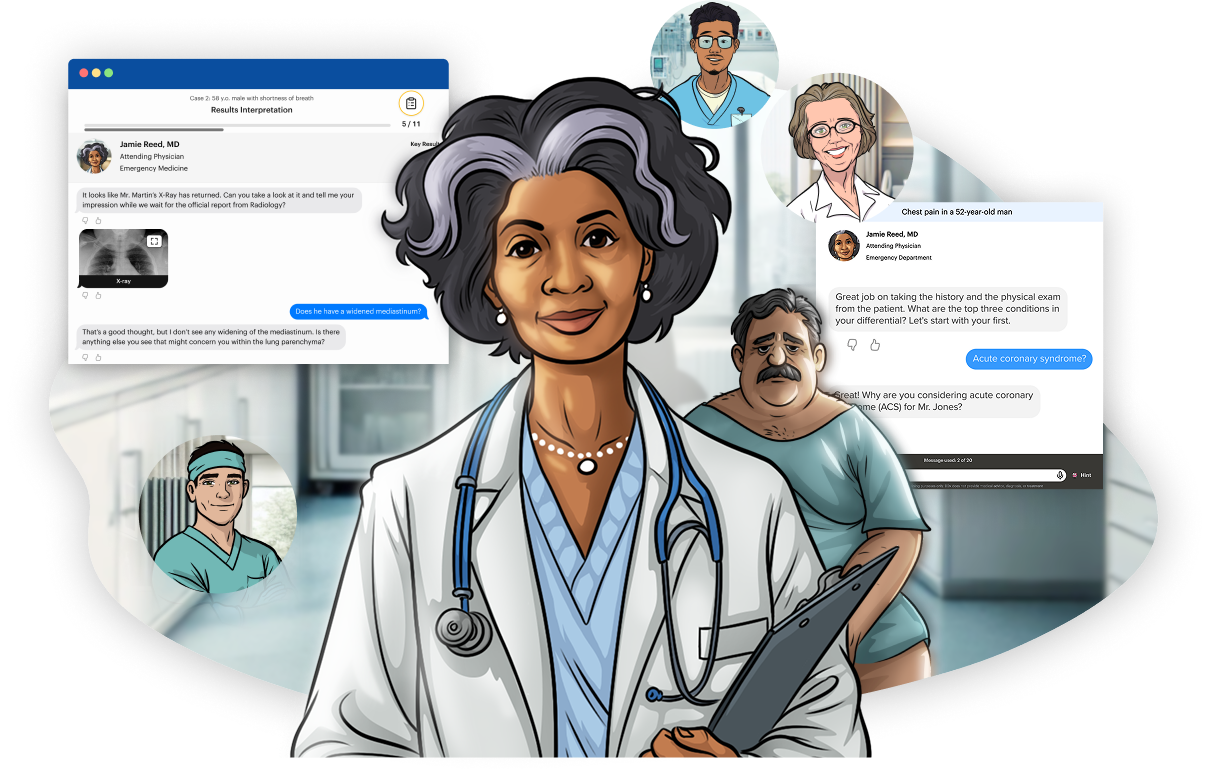
Ace your rotations today
Sketchy cases gives you interactive virtual patient encounters where you can:
✅ Practice building a differential
✅ Make real-time decisions
✅ Get feedback on your reasoning
✅ Prep for how you’ll be questioned on rotations
Don’t just memorize, learn to think like a clinician.